
Everybody wants to know about their judgment or their relative’s case verdict, but they don’t know how can find it. Therefore I am going to tell you in a simple way how you can find any judgment or verdict or any court, but we cannot access if the case proceeded in camera hearing because of maintaining the privacy and confidentiality of the victims or child.
First of all, we need to open the official website of the Supreme Court of Nepal, www.supremecourt.gov.np then scroll down and search and find out the “Faisala” with the subtitle “Nirnaya/Adeshko Purnapatha”
If you don’t know the Nepali language, you can take an assistant with google translation, it will help you to understand things.
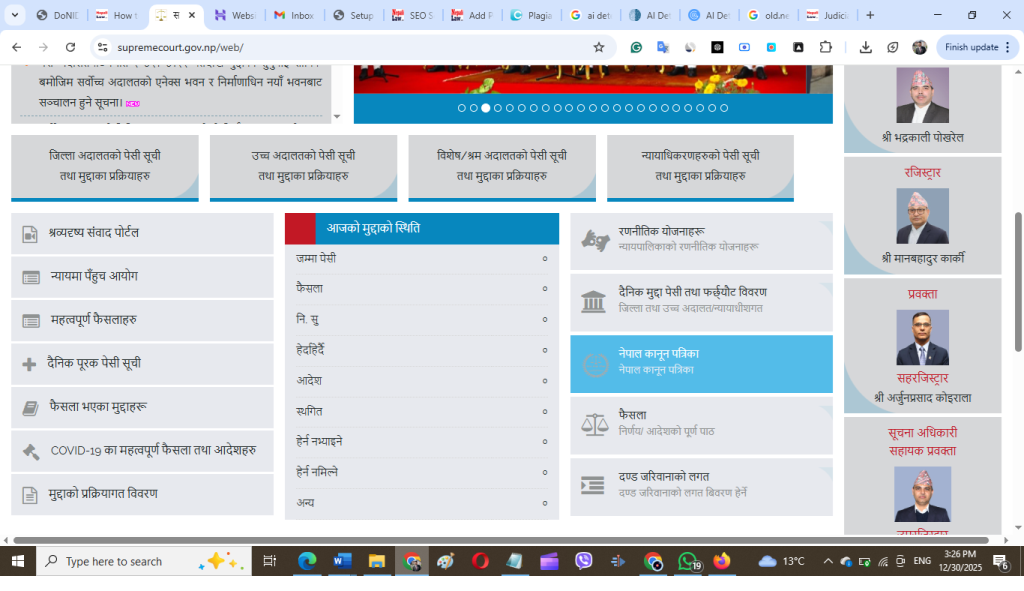
Then click in the part, open as this picture

You can search by the case/lawsuits or writ petition or application number, or by case registration date or by case decision date.
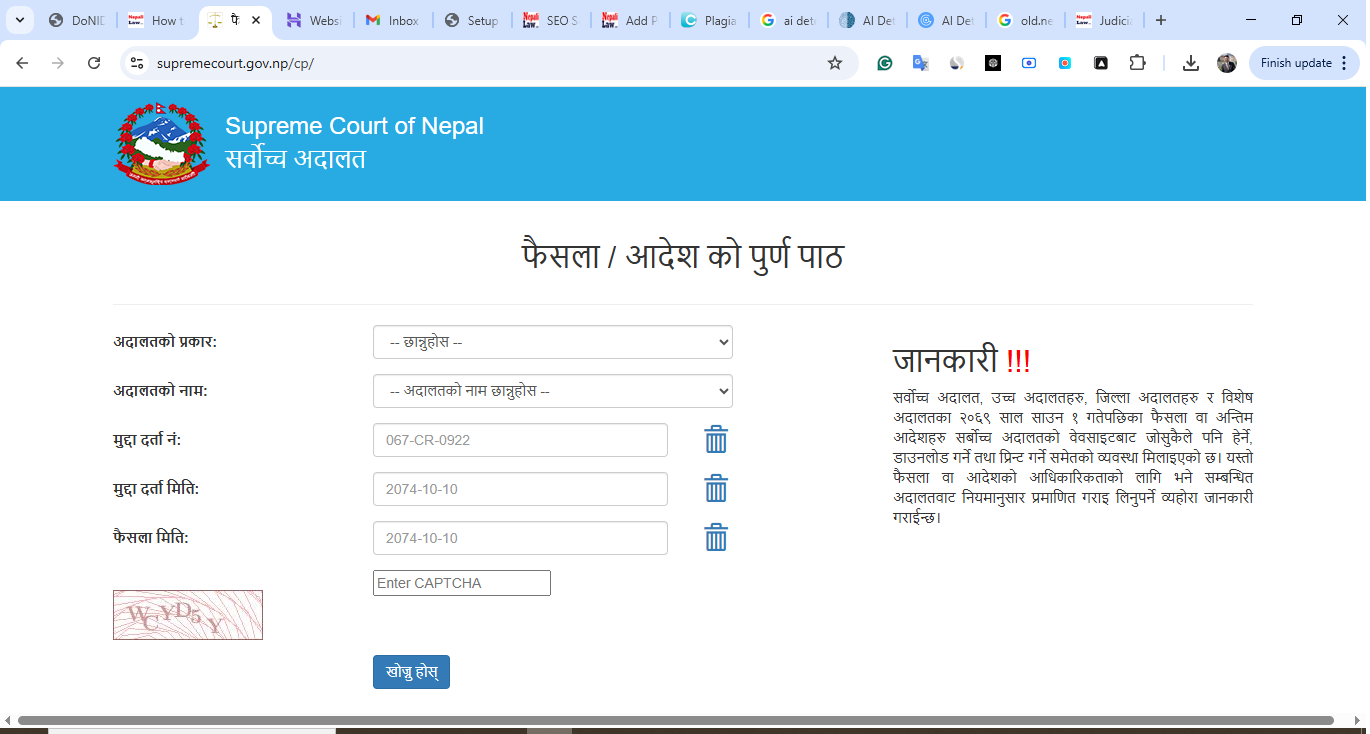
After that, select types of Courts such as the Supreme Court, the High Court, or the District court of other court ( other courts mean special court).
Similarly, select the courts, you can select only one court in one time, for instance, Patan High court,
Likewise, put the Case number provided by the court for example 070-CR-0021,
or put the case/lawsuit registration date,
or put the case/lawsuits decision date,
I am going to search by case decision date, if you have a number of cases, it easy to search.
Here I select and put information as;
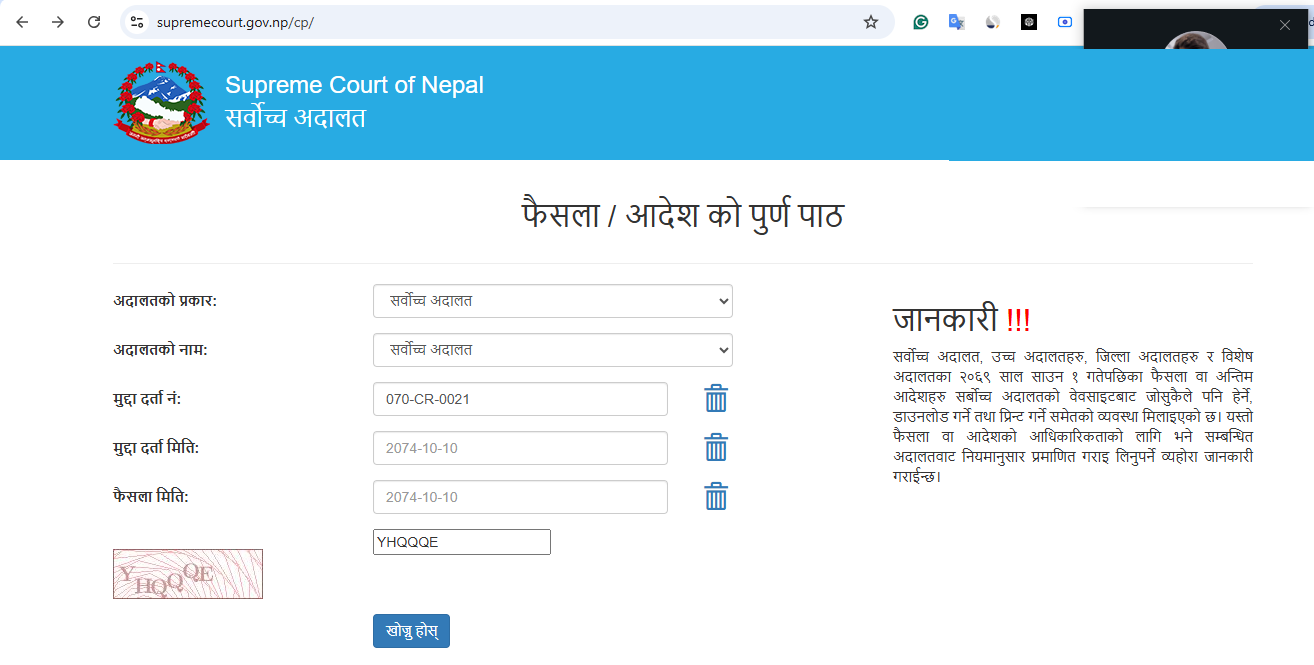
Then click on search botton “Khojnu Hos”
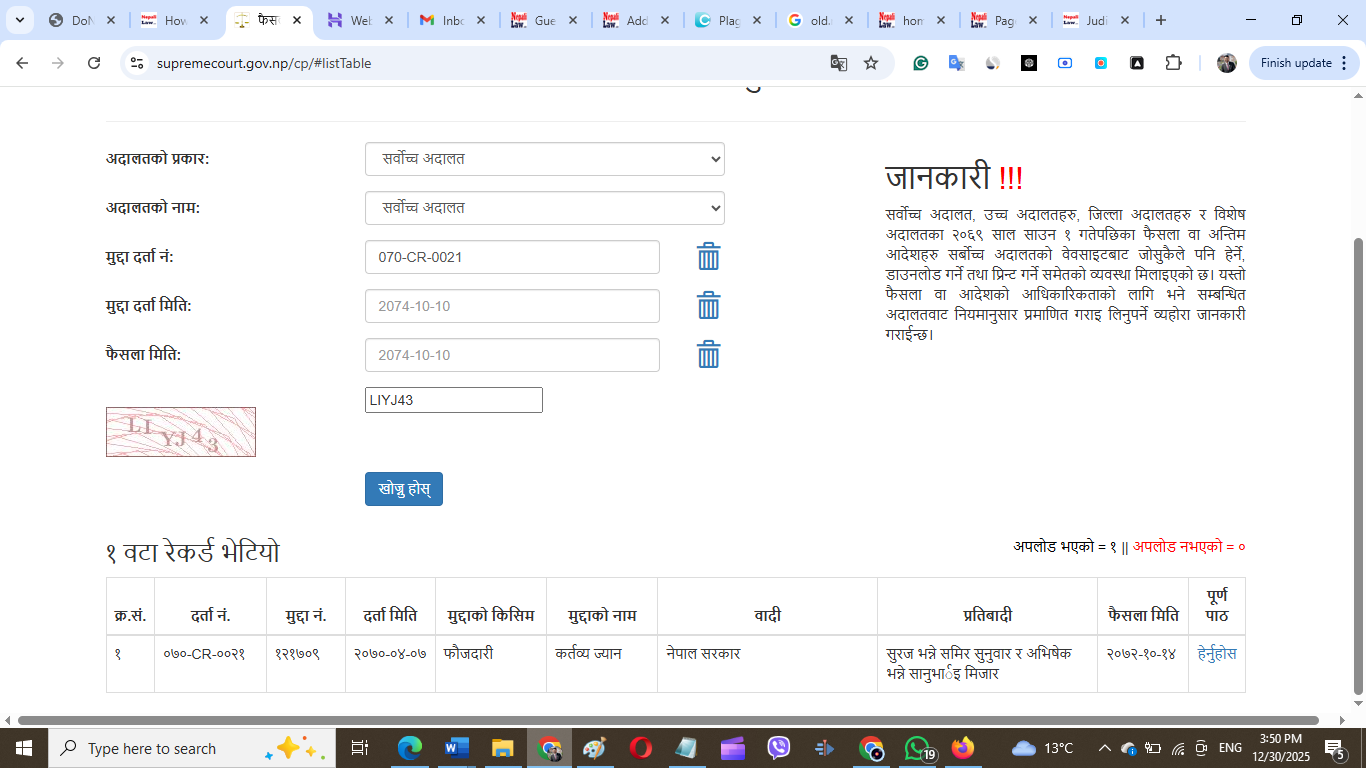
You result is appeared in below click the last right-side button “हेर्नुहोस्”. When I click on that button, the docs/pdf file will be downloaded with the full text of the verdict/judgment of the case.
Congratulation! You have successfully learned how to find any verdict of the case.
In the same way, you can find any judgment or verdict of any court of Nepal.




“Great article on accessing court decisions in Nepal! It’s a very useful guide for anyone navigating the legal system. One question though: if someone needs to submit these court documents internationally (e.g., for visa or legal purposes), would they require a certified true copy? I’ve heard some countries demand notarized or authenticated versions. Does Nepal have a similar process? For reference, here’s an example of how certified copies work in other jurisdictions. Would appreciate any insights on this!”